Your World Cup Home Base: Pioneer Square, the East Bay, and UnCommon Coworking
Your Landlord Doesn't Care If Your Business Succeeds. Ours Does.
Every founder who's ever signed a traditional office lease knows the feeling — the moment the ink dries, your landlord's interest in you drops to zero. But what happens when the people who own your building are also actively invested in the ecosystem around it?
There's a moment that almost every entrepreneur who's rented traditional office space has experienced. You sign the lease. You shake hands. And then — almost immediately — you realize that the landlord's job is done. The money will flow in monthly whether you crush it or crater. Your growth, your culture, your ability to recruit, your survival through a tough quarter: none of it changes anything about the relationship. You have four walls and a bill. That's the deal.
It's not malicious. It's just the architecture of traditional commercial real estate. A standard lease is built to be transactional: space in exchange for rent, a contract between two parties who both assume they'll never really need to understand each other. The landlord delivers premises; you pay for them. Full stop.
But something has been shifting in how the best workspaces operate — and it matters enormously for founders and early-stage teams. A growing body of research in commercial real estate confirms what many founders already sense intuitively: the most successful tenants aren't the ones who got the best price per square foot. They're the ones who found themselves in a building where someone actually cared.
The Transaction vs. The Relationship
Traditional commercial leasing is optimized for the landlord's certainty — long terms, personal guarantees, limited flexibility, and zero shared upside. The moment you sign, the risk transfers entirely to you. If your company thrives, the landlord benefits through lease renewals at higher rates. If you struggle, they keep the security deposit. The structure is designed to insulate the property owner from any stake in your outcome.
The relational model works entirely differently. When the space you work in is operated by people who want you to succeed — who are thinking about introductions they can make, events that might open a door, a neighbor tenant who might become a partner — the dynamic changes fundamentally. You're no longer a rent check. You're a member of something.
"When treated as an amenity — when the space itself becomes part of the value proposition — what you're really selling is an environment where people do better work and build better companies."
This is the ethos behind how UnCommon approaches its spaces. UnCommon is operated by Rubicon Point Partners, a real estate investment firm — which means UnCommon isn't a coworking startup trying to flip memberships. It's a building owner that decided the right way to activate its properties was to be genuinely invested in the people inside them. That's a structurally different starting point, and it changes everything downstream.
What "Invested in the Ecosystem" Actually Means
When someone says a coworking operator "cares about community," it can mean a lot of things — most of them shallow. Free coffee and a ping-pong table aren't a community. A Slack channel isn't a community. Real investment in an ecosystem looks like something more specific.
It looks like a team member who notices that one of your members is a growth-stage SaaS company and another is a fractional CFO who specializes in exactly that profile — and makes an introduction because it occurred to them to do it. It looks like an event that brings founders into the same room with the kind of operators, investors, and domain experts who can actually move the needle. It looks like a property owner who tracks not just square-foot utilization but whether the businesses in the building are growing.
Research into what makes coworking spaces actually work consistently finds that the most valuable thing isn't the desk or the conference room — it's who else is in the building and whether someone is actively curating those connections. The spaces that retain members longest and generate the most referrals are the ones where people feel genuinely known. That's what a relational model makes possible that a transactional one structurally cannot.
For founders especially, this matters in ways that go beyond the warm feeling of being "part of a community." Being in a building where the operator has a stake in your success means you have access to an informal network of problem-solvers, potential collaborators, and people who've solved versions of your exact problems. That's a material business advantage. It's the difference between working in isolation and working in an ecosystem.
The Properties Where This Shows Up
The UnCommon model runs through three properties — each a historic building with a distinct character, and each operated as a genuine community rather than a managed desk inventory.
The Rotunda
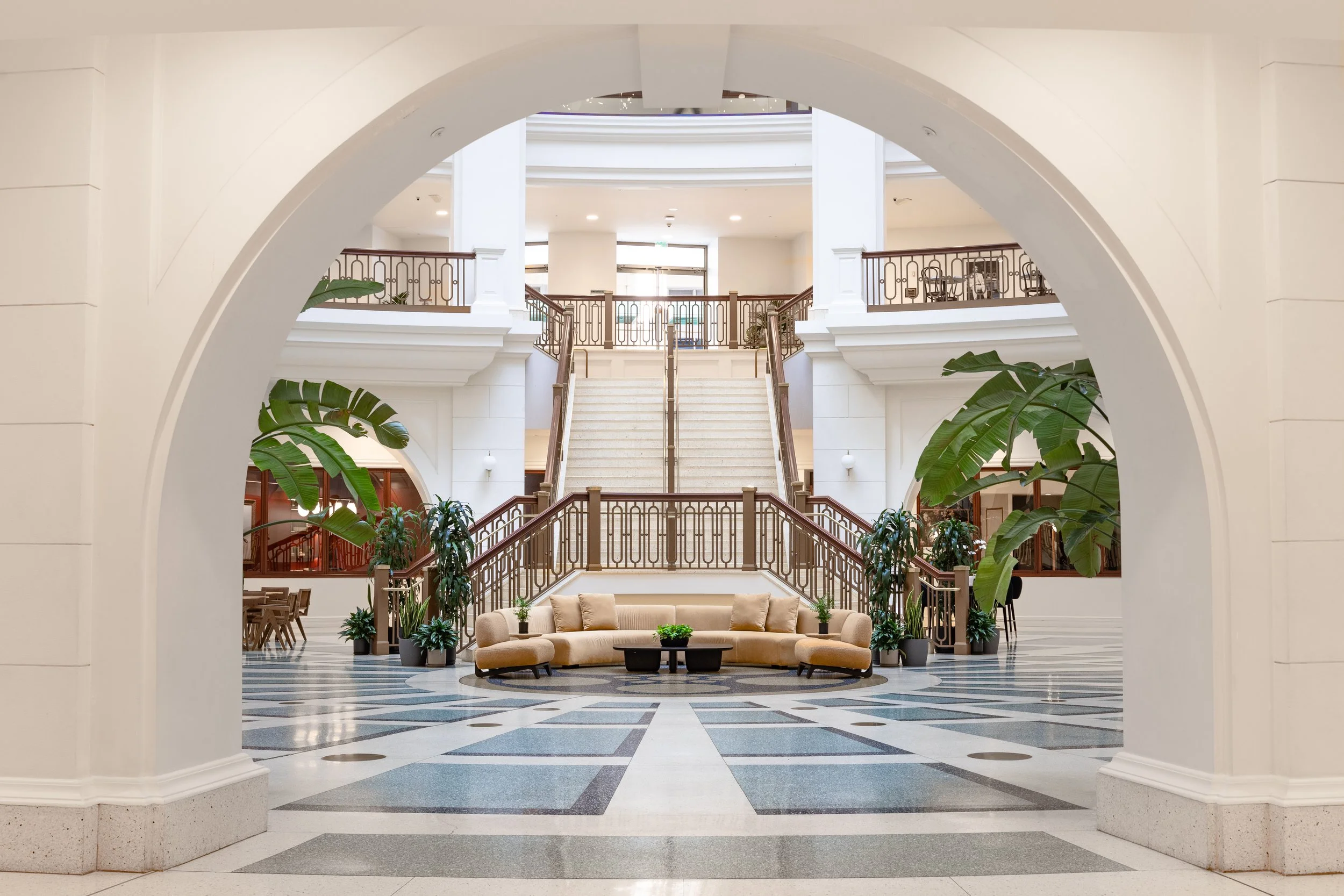
A 1913 Beaux-Arts landmark that survived the 1989 earthquake and a century of Oakland's economic cycles, now fully restored and operating as UnCommon's flagship space. It's home to private offices, a podcast studio, a golf simulator, a cold plunge wellness center, and The UnCommon Collective — a 50-person event and community space. The ecosystem here leans toward tech founders, AI builders, and the kind of ambitious operators who want to be in Oakland's most storied building. The team knows the members by name and by business model.
Explore The Rotunda →
Masin Block
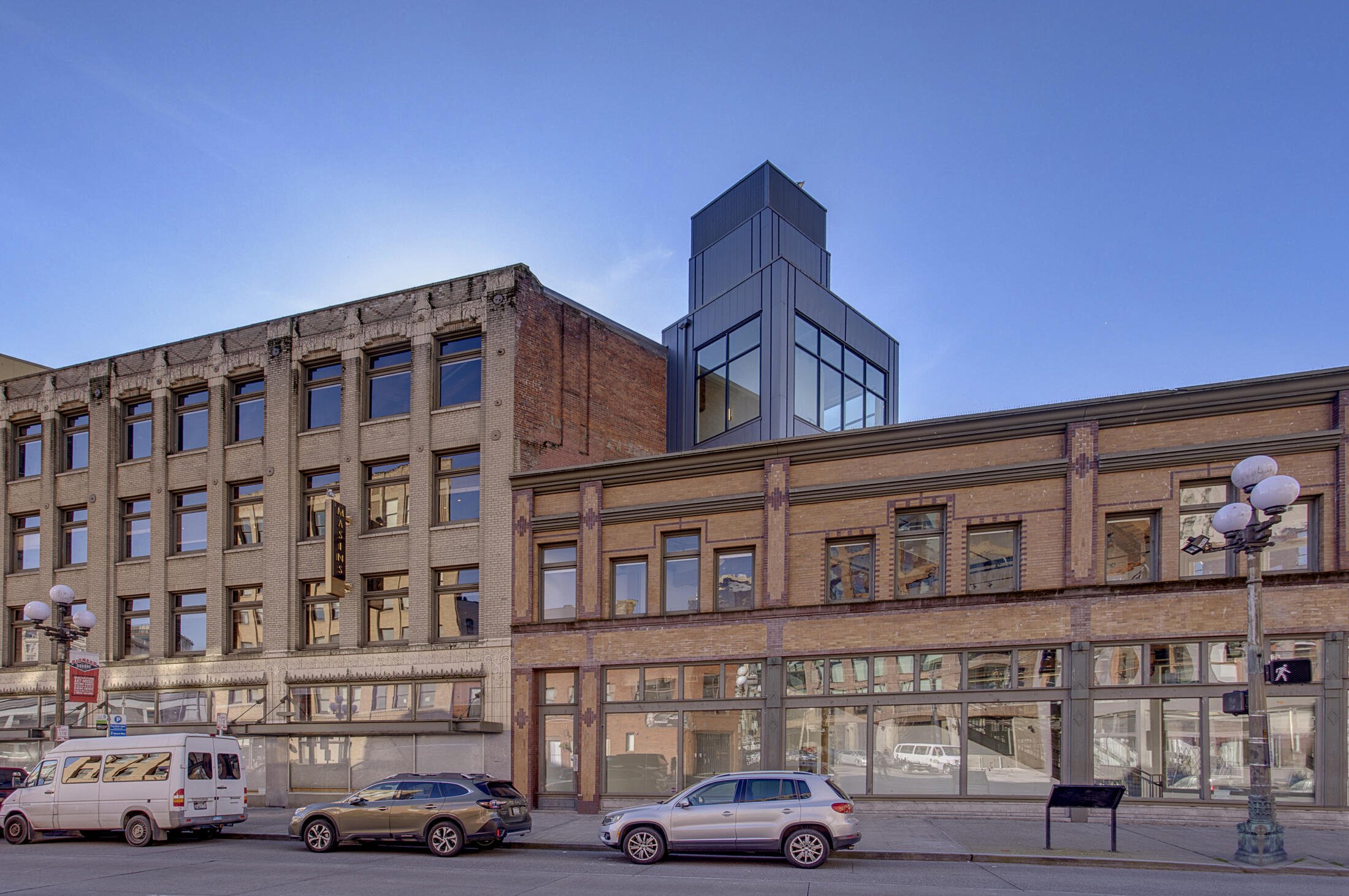
Built in the late 1800s by the architect behind Pioneer Square's iconic post-fire streetscape, Masin Block has its own community gravity. Founders and creative teams who come here aren't just looking for a desk — they're looking for the kind of environment that signals seriousness without stuffiness. The building survived the Great Seattle Fire of 1889, and its operators take that legacy seriously: the space is run as a place where things are actually built, not just where people show up to look busy.
Explore Masin Block →
200 Pine
Steps from Montgomery Street BART, 200 Pine sits in the Financial District and was designed specifically for the AI-forward, founder-first company that needs a San Francisco address and a serious environment without a traditional lease. The community here is intentionally curated — the team at UnCommon thinks carefully about who's in the building and who should meet whom. It's the kind of proximity that doesn't happen by accident.
Explore 200 Pine →Why It Matters More Than You Think
The coworking industry has matured enough that most founders now understand the basics: flexible terms, all-inclusive amenities, month-to-month contracts instead of five-year commitments. Those are table stakes. The more interesting question — the one that separates a good workspace decision from a great one — is what the operator is actually trying to do.
The coworking sector in 2025 and 2026 is converging on a clear insight: the spaces that win aren't the ones with the most square footage or the sleekest interiors. They're the ones where the operator has built something that people genuinely don't want to leave — because the people are good, the community is real, and someone in charge actually cares whether the businesses inside are growing.
A traditional landlord will never ask how your last fundraise went. They won't notice when a new member joins who happens to be exactly the kind of advisor you've been looking for. They won't host an event designed to put the right people in a room with you. That's not the job description, and it never will be — because transactional relationships aren't built for that.
Relational ones are. And for founders and teams who are building something real, that distinction turns out to be more material than any lease term.
Where you work isn't just a logistics decision. It's a signal about what kind of company you're building, and it shapes — more than most founders expect — who you meet, what you learn, and how fast things move. The best workspace you can find isn't the cheapest or the most convenient. It's the one where someone with real ownership in the building actually wants you to win.
Work somewhere that's on your side.
Tour UnCommon's coworking spaces in Oakland, Seattle, and San Francisco — operated by the people who own the buildings, and invested in the people inside them.